
Tympanoplasty

Duration
0.5-2 hours
Downtime
1-2 weeks

Insurance
Covered
Setting
Outpatient
Overview
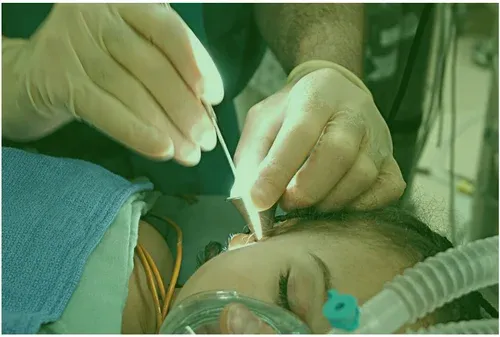
The tympanic membrane (eardrum) is a coin-sized tissue that transmits sounds and protects the inner ear. When it gets damaged, a procedure called Tympanoplasty will be performed to reconstruct the eardrum, restore the hearing ability back, and minimize infections.
Understanding Your Condition
When an eardrum tear (because of using ear swaps, explosions, high pressure, or infections), patients might experience:
- A sharp sudden pain.
- Muffled sounds, like hearing underwater.
- Dizziness or hearing some buzzing as well. Simani, L., Oron, Y., Handzel, O., Eta, R. A., Warshavsky, A., Horowitz, G., Muhanna, N., & Ungar, O. J. (2021). Paper Patching Versus Watchful Waiting of Traumatic Tympanic Membrane Perforations: A Meta-Analysis. The Laryngoscope, 131(9), 2091–2097. https://doi.org/10.1002/lary.29580
This situation can become very uncomfortable for patients. The buzzing can disrupt the patient’s sleep, hearing loss can make conversations challenging, even hearing warning sounds, like in traffic or an alarm, can become difficult.
Luckly, small tears mostly heal on their own. However, larger tears require tympanoplasty to restore the eardrum function back.
When to Consider Tympanoplasty?
You will need tympanoplasty if you have:
- Large tears (more than half your eardrum) that haven't healed after 6-8 months of watchful waiting.
- Recurring tears in the same location.
- Chronic ear infections that keep coming back despite antibiotic treatment.
- A cyst of abnormal skin growth building up inside a tear and damaging ear structures (cholesteatoma)
- Significant hearing loss that affects your daily life. Simani, L., Oron, Y., Handzel, O., Eta, R. A., Warshavsky, A., Horowitz, G., Muhanna, N., & Ungar, O. J. (2021). Paper Patching Versus Watchful Waiting of Traumatic Tympanic Membrane Perforations: A Meta-Analysis. The Laryngoscope, 131(9), 2091–2097. https://doi.org/10.1002/lary.29580 Brar, S., Watters, C., & Winters, R. (2025). Tympanoplasty. In StatPearls. StatPearls Publishing. http://www.ncbi.nlm.nih.gov/books/NBK565863/ Shetty, S. (2012). Pre-Operative and Post-Operative Assessment of Hearing following Tympanoplasty. Indian Journal of Otolaryngology and Head and Neck Surgery: Official Publication of the Association of Otolaryngologists of India, 64(4), 377–381. https://doi.org/10.1007/s12070-011-0331-6
Benefits
High success rate: ~85-90% of patients with moderate ruptures (<50% of the tympanic membrane) had a complete successful hole closure. This was slightly less for people with larger ruptures (~80-83%). Lewis, A., Vanaelst, B., Hua, H., Yoon Choi, B., Jaramillo, R., Kong, K., Ray, J., Thakar, A., Järbrink, K., & Hol, M. K. S. (2021). Success rates in restoring hearing loss in patients with chronic otitis media: A systematic review. Laryngoscope Investigative Otolaryngology, 6(3), 522–530. https://doi.org/10.1002/lio2.576 Nicholas Jungbauer, W., Jeong, S., Nguyen, S. A., & Lambert, P. R. (2023). Comparing Myringoplasty to Type I Tympanoplasty in Tympanic Membrane Repair: A Systematic Review and Meta-analysis. Otolaryngology--Head and Neck Surgery: Official Journal of American Academy of Otolaryngology-Head and Neck Surgery, 168(5), 922–934. https://doi.org/10.1002/ohn.191
Improved hearing: Almost 85% of patients notice hearing improvement after surgery.
Most patients notice near normal hearing after surgery. People will hear softer sounds and communicate more easily. Steiner, N., Vozel, D., Bozanic Urbancic, N., Troha, K., Lazar, A., Kralj-Iglic, V., & Battelino, S. (2025). Enhancing the Outcomes of Temporalis Fascia Tympanoplasty Using Autologous Platelet-Rich Plasma and Gel: A Randomized Controlled Trial. Journal of Personalized Medicine, 15(6), 233. https://doi.org/10.3390/jpm15060233 Lewis, A., Vanaelst, B., Hua, H., Yoon Choi, B., Jaramillo, R., Kong, K., Ray, J., Thakar, A., Järbrink, K., & Hol, M. K. S. (2021). Success rates in restoring hearing loss in patients with chronic otitis media: A systematic review. Laryngoscope Investigative Otolaryngology, 6(3), 522–530. https://doi.org/10.1002/lio2.576
Procedure Types
The surgical approach depends on your tear size - smaller tears can often be repaired through your ear canal, while larger tears may need a small incision.
Endoscopic
Pain : Less Pain
Size of Rupture Treated : Small ruptures
Scarring : None to minimal scarring Bianchini, A. J., Berlitz, V. G., Mocelin, A. G., Ribeiro, J. F., Keruk, J. G., & Hamerschmidt, R. (2023). Endoscopic or Microscopic Tympanoplasty Advantages and Disadvantages: A Theory Domain Systematic Review. International Archives of Otorhinolaryngology, 27(3), e528–e535. https://doi.org/10.1055/s-0042-1748808 Brar, S., Watters, C., & Winters, R. (2025). Tympanoplasty. In StatPearls. StatPearls Publishing. http://www.ncbi.nlm.nih.gov/books/NBK565863/ Tseng, C.-C., Lai, M.-T., Wu, C.-C., Yuan, S.-P., & Ding, Y.-F. (2017). Comparison of the efficacy of endoscopic tympanoplasty and microscopic tympanoplasty: A systematic review and meta-analysis. The Laryngoscope, 127(8), 1890–1896. https://doi.org/10.1002/lary.26379 Wang, T.-C., Shih, T.-C., Chen, C.-K., Hsieh, V. C.-R., Lin, D.-J., Tien, H.-C., Chen, K.-C., Tsai, M.-H., Lin, C.-D., & Tsai, C.-H. (2024). Endoscopic Versus Microscopic Type I Tympanoplasty: An Updated Systematic Review and Meta-analysis. Otolaryngology--Head and Neck Surgery: Official Journal of American Academy of Otolaryngology-Head and Neck Surgery, 170(3), 675–693. https://doi.org/10.1002/ohn.597 Akyigit, A., Sakallıoglu, O., & Karlidag, T. (2017). Endoscopic tympanoplasty. Journal of Otology, 12(2), 62–67. https://doi.org/10.1016/j.joto.2017.04.004 Stefan, I., Stefanescu, C. D., Vlad, A. M., Zainea, V., & Hainarosie, R. (2023). Postoperative Outcomes of Endoscopic versus Microscopic Myringoplasty in Patients with Chronic Otitis Media-A Systematic Review. Medicina (Kaunas, Lithuania), 59(6), 1074. https://doi.org/10.3390/medicina59061074
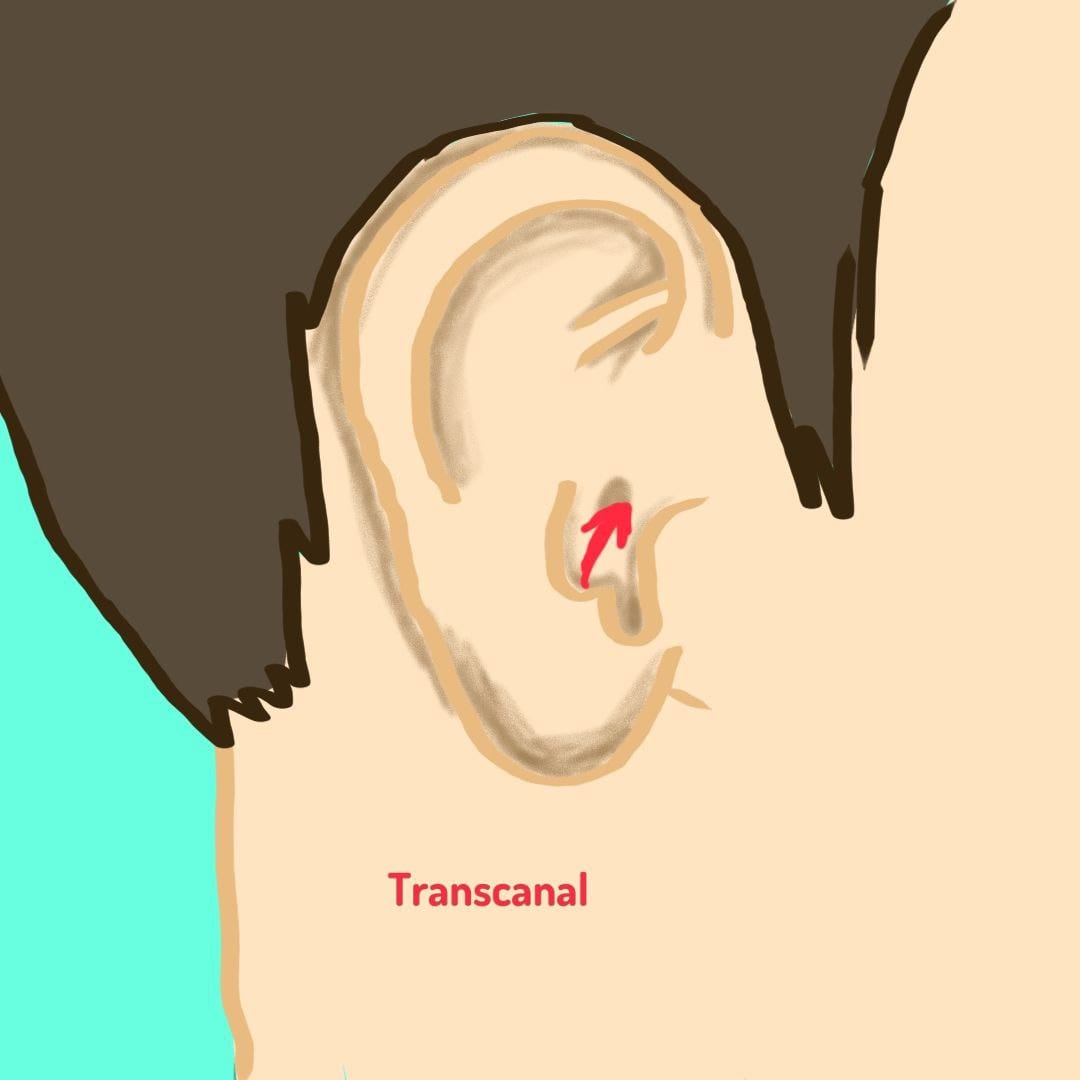
Incision approach: Trans canal, useful for small holes and incisionless
Microscopic
Pain : More pain
Size of Rupture Treated : Large ruptures
Scarring : Moderate to extensive scarring Bianchini, A. J., Berlitz, V. G., Mocelin, A. G., Ribeiro, J. F., Keruk, J. G., & Hamerschmidt, R. (2023). Endoscopic or Microscopic Tympanoplasty Advantages and Disadvantages: A Theory Domain Systematic Review. International Archives of Otorhinolaryngology, 27(3), e528–e535. https://doi.org/10.1055/s-0042-1748808 Brar, S., Watters, C., & Winters, R. (2025). Tympanoplasty. In StatPearls. StatPearls Publishing. http://www.ncbi.nlm.nih.gov/books/NBK565863/ Tseng, C.-C., Lai, M.-T., Wu, C.-C., Yuan, S.-P., & Ding, Y.-F. (2017). Comparison of the efficacy of endoscopic tympanoplasty and microscopic tympanoplasty: A systematic review and meta-analysis. The Laryngoscope, 127(8), 1890–1896. https://doi.org/10.1002/lary.26379 Wang, T.-C., Shih, T.-C., Chen, C.-K., Hsieh, V. C.-R., Lin, D.-J., Tien, H.-C., Chen, K.-C., Tsai, M.-H., Lin, C.-D., & Tsai, C.-H. (2024). Endoscopic Versus Microscopic Type I Tympanoplasty: An Updated Systematic Review and Meta-analysis. Otolaryngology--Head and Neck Surgery: Official Journal of American Academy of Otolaryngology-Head and Neck Surgery, 170(3), 675–693. https://doi.org/10.1002/ohn.597 Stefan, I., Stefanescu, C. D., Vlad, A. M., Zainea, V., & Hainarosie, R. (2023). Postoperative Outcomes of Endoscopic versus Microscopic Myringoplasty in Patients with Chronic Otitis Media-A Systematic Review. Medicina (Kaunas, Lithuania), 59(6), 1074. https://doi.org/10.3390/medicina59061074
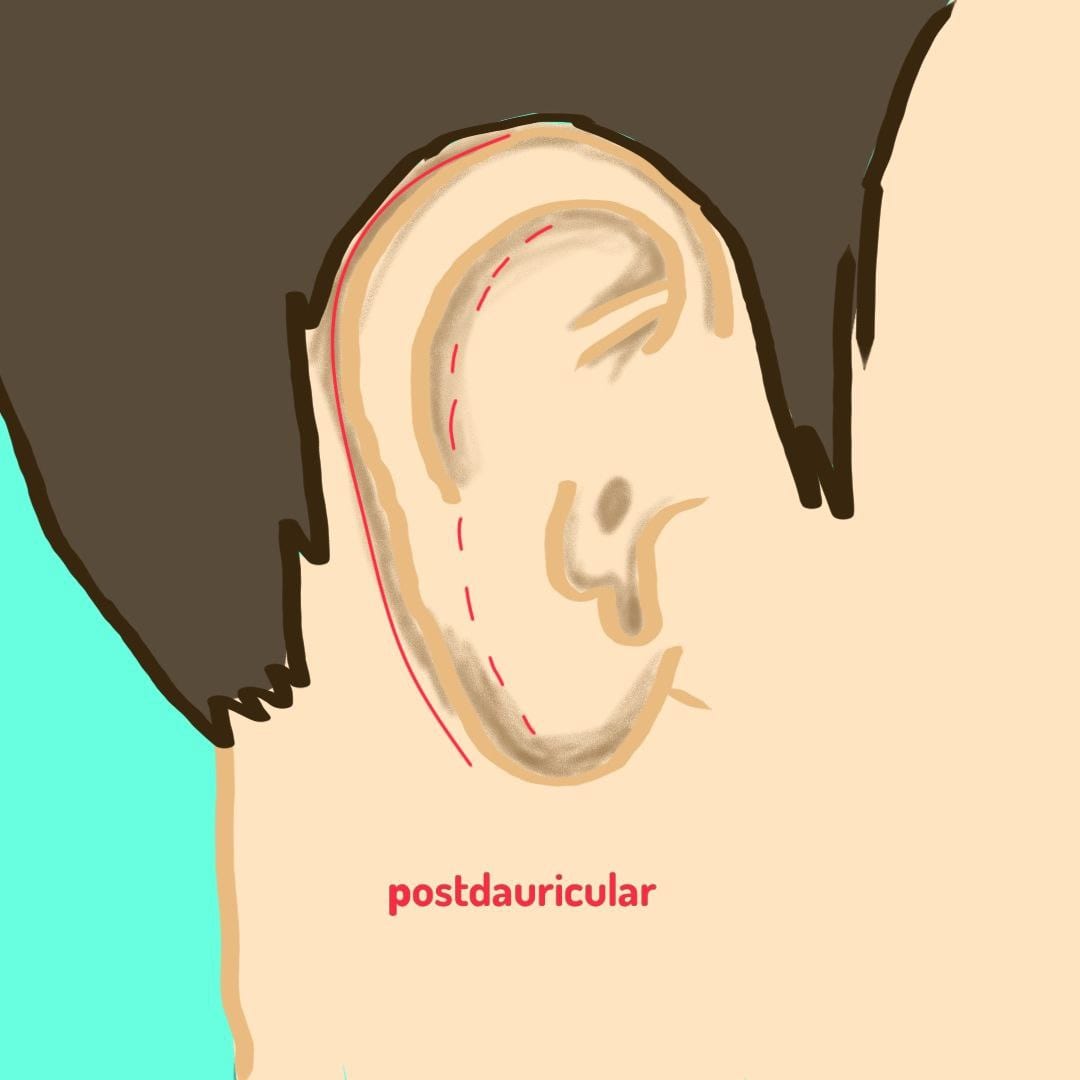
Incision approach:
Postauricular:
-This incision is made behind the ear.
- Most used in practice.
-For large holes.
-Leaves a scar behind the ear.
Endaural :
-The incision is made in the upper end of the ear above the ear canal.
-Useful for small holes
Risks
Tympanoplasty is generally safe with an overall complication rate of about 14%. Most complications are temporary, and they resolve on their own.
Typical complications that resolve shortly after procedure:
-Dizziness
-Tinnitus (hearing noise within the ear)
Complications that do not resolve on their own and need a reoperation:
-Infection and ear fluid drainage (1-2%) Lewis, A., Vanaelst, B., Hua, H., Yoon Choi, B., Jaramillo, R., Kong, K., Ray, J., Thakar, A., Järbrink, K., & Hol, M. K. S. (2021). Success rates in restoring hearing loss in patients with chronic otitis media: A systematic review. Laryngoscope Investigative Otolaryngology, 6(3), 522–530. https://doi.org/10.1002/lio2.576
Risks Factors
These patients could be at a higher risk:
- Patients with active cancer, or excessive infections like brain abscess and meningitis.
- Senior patients with mild symptoms, because of higher general surgery complications.
- Children under the age of 4 and with one functional ear should avoid tympanoplasty, as they recover faster with no need for surgery. However, if they have hearing loss in both ears, it will affect their development and tympanoplasty is then indicated Brar, S., Watters, C., & Winters, R. (2025). Tympanoplasty. In StatPearls. StatPearls Publishing. http://www.ncbi.nlm.nih.gov/books/NBK565863/
Anesthesia
General anesthesia is usually used for both surgical approaches. This means that you will be asleep and won't feel anything.
However, for endoscopic approach, adults might be offered local anesthesia with sedation but it might it may cause anxiety or discomfort from noise
Chapter references
- 1
- 2
- 3
- 4
- 5
Navigation: