
Rhytidectomy (Facelift)

Duration
2-3 hours
Downtime
2-4 weeks
lasts for
10-20 years

Cost
11000-15000$
Setting
Outpatient
Overview
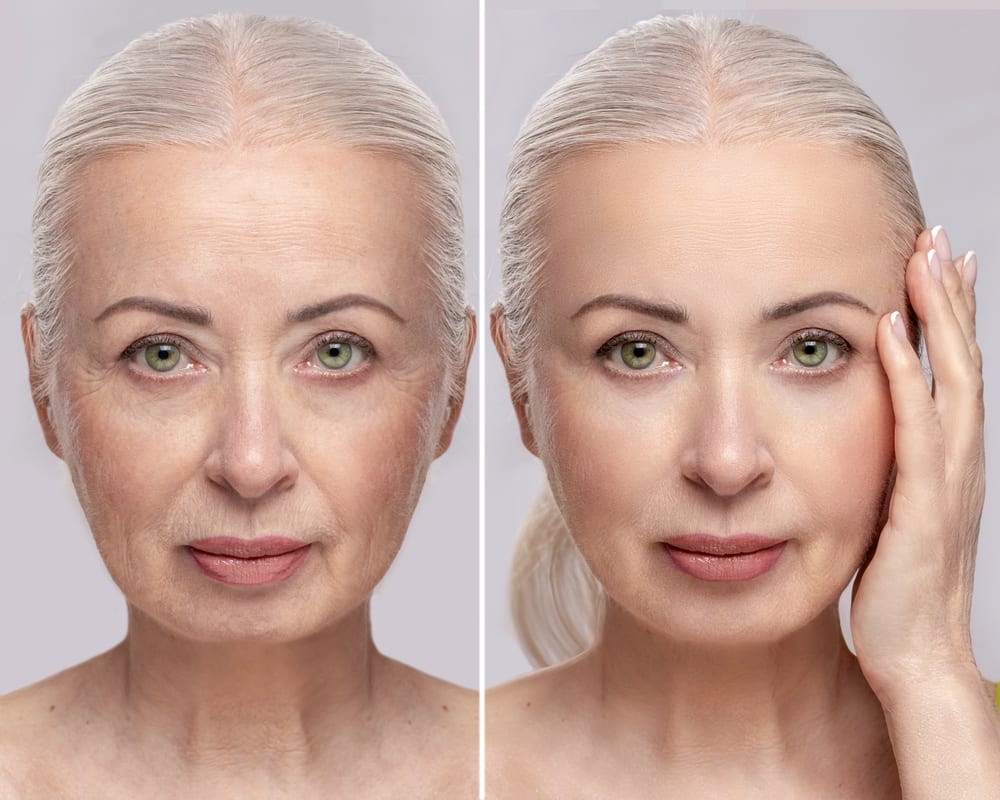
Facelift is a popular cosmetic procedure with 131,000 annual treatments in the United States. It rejuvenates the face by reducing wrinkles and excess skin (softening wrinkles and tightening loose skin).
Candidates
We recommend facelift, rhytidectomy, for individuals in their 40s or 50s who have:
- Loose or excess skin in the face or neck
- Excess fat, especially around the jawline
- Deep facial wrinkles or folds
- Facial trauma or burns
Benefits
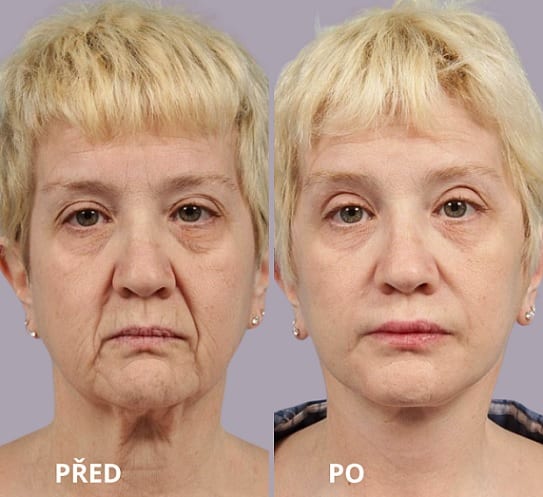
Perceived age: 7 – 10 years younger
High Satisfaction: 95% of patients are satisfied with their results
Long-lasting: 10-15 years.
Common Misconceptions
Facelift is not Suitable for Men
A growing number of men undergo this procedure to restore a more youthful appearance. Surgeons tailor the procedure according to an individual’s bone structure and skin thickness.
Delaying Facelift is Better
Some believe they should delay facelift until skin sagging and wrinkles are pronounced, hoping to get facelift once in their lifetime.
However, the longer you wait, the heavier and more obvious the correction is. Having the procedure around the age of 50 or earlier yields subtler and more natural-looking results.
Facelift Replaces other Anti-aging care
Facelift tightens skin but doesn’t improve texture or tone. You should follow daily sun protection and a solid skincare routine to optimize your results.
Facelift Makes You Age Faster Once its Effect Fades
Your face will keep aging at its normal pace; facelift just turns the clock back. As its effect fades, you catch up to your real age and not ahead of it.
Procedure Types
Facial Area Treated
Facelift can involve part of or the whole face depending on your specific goal.
Full Facelift
Eyebrows, eyelids, cheeks, chin, and neck
.png&w=3840&q=82)
Incision at the hairline of your temples and extends downwards in front of the ear, then goes behind the ear until it reaches the lower scalp.
Another incision can be made under the chin.
Midface lift
Cheeks and nasolabial folds
-1.png&w=3840&q=82)
Two small incisions from the outer temple hairline, passing in front of the ear till the hairline behind the ear.
Mini Facelift
Lower 2/3 of face and upper neck
.png&w=3840&q=82)
Short incision from the temple hairline to the front of the ear
Depth of the Lift
Facelift is not one size fits all. Your surgeon may tighten just the skin or also lift muscle and fat, depending on your bone structure, aging changes, and aesthetic goal.
Superficial Lift | Deep Lift |
Subtle short-term Changes | More dramatic, Longer-term Lifting |
Safer and Faster recovery | More Risky and Longer Downtime |
Risks
Facelift surgery is a safe operation. Most complications are temporary and curable, while long-term consequences are rare.
Adverse Reaction | % | Fate/What Will Happen? |
|---|---|---|
Blood collection under the skin | 1-2% | Removed by a needle or surgical cut |
Facial nerve injury (Asymmetry) | 0.5-2% | Resolve spontaneously in days to weeks but can take up to 2-4 months. Permanent in 0.05% (1 in 2,000) (Gandra et al., 2025; Jacono et al., 2019). |
Numbness and tingling | 0.3-7% (Permanent in 0.05%) | Sensation typically returns within ~1 year as other nerves compensate. (Gandra et al., 2025) |
Skin tissue death | 0.4% (Mortada et al., 2024) (up to 3–4% in smokers or extensive techniques) | Removal of dead tissue and proper wound care. |
Infection | 0.3% (Gupta et al., 2016) | Antibiotics before and after the surgery. 0.18% require hospitalization (Sinclair et al., 2021). |
Hair loss at incision line | 8% (persistent in 1 – 3 %) | Can be minimized with proper surgical technique |
Deformity of the earlobe | Rare | Might require re-operation (Cristel & Irvine, 2019). |
Navigation: