
Rhinoplasty (Nose Job)

Duration
1-4 hours
Downtime
1-2 weeks

Setting
Outpatient
Cost
9000-12000$
Lasts for
Long Lasting
Overview
Rhinoplasty is one of the most common cosmetic procedures worldwide with 350,000 treatments annually. While being more popular among women, rhinoplasty is considered the most common plastic surgery among men.
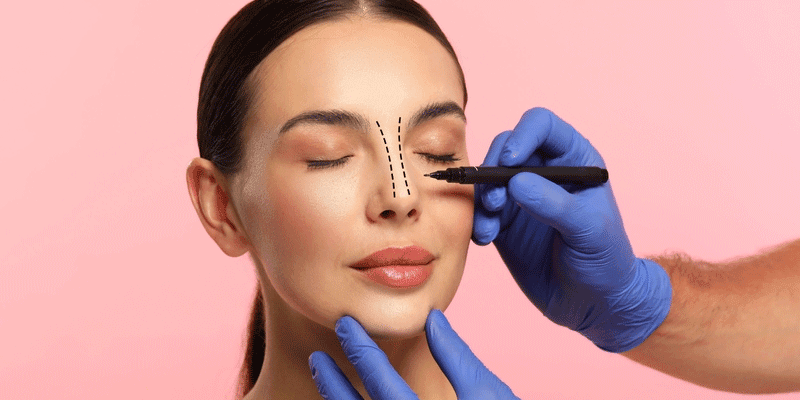
It involves sculpting the nose by adding grafts to depressed areas, removing tissue from elevated areas, or repositioning the supporting bones, cartilage, and soft tissue.
Candidates
You might be a good candidate for rhinoplasty if you have:
- Nasal Irregularities
- Nasal Humps
- Depressed nose
- Depressed nasal tip
- Asymmetry
- Wide nose
Rhinoplasty is Ineffective for:
Age Below 15 Years for Females and 17 for Males
The nasal skeleton below that age will not be completely developed, and further changes might occur in the future.
Recent Rhinoplasty Surgery
If you’ve had rhinoplasty before and are not satisfied with the outcome, it is best to wait at least a year to assess the final results before considering a revision procedure.
Medical Uses of Rhinoplasty
- Breathing issues due to nose trauma or prior surgery
- Persistent nasal congestion due to seasonal allergy that is unresponsive to medical treatment.
- A nasal defect since birth that alters its shape and/or function.
What Can Go Wrong?
- Excessive removal of bone or cartilage: Causes cosmetic distortion and breathing issues (or loss of sensation to air entry which gives a feeling of nasal obstruction)
- Contour irregularity 1%
- Graft displacement: due to inability to securely anchor it.
- Perforation of Nasal Septum: treated with nasal spray if small or surgery if large or causing obstruction/bleeding.
Benefits
- Satisfaction: 83%-89% are satisfied with their surgical outcomes.
- Psychological well-being: Boosts self-esteem and social confidence.
- Improved breathing
Procedure Types
Rhinoplasty is not a one-fits-all surgery, but follows a personalized approach based on your skin thickness, cartilage strength, and bony structures.
Open Rhinoplasty
Incision site is on the outer skin
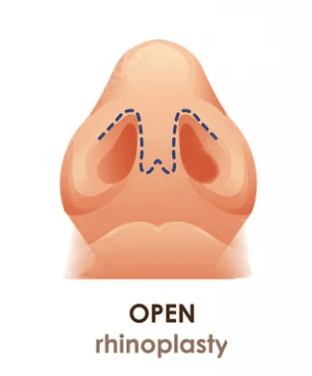
Best for :
- Complex cases
- When extra tissue grafts are required
- Black people due to their thick skin
Closed Rhinoplasty
Incision site is inside the nose
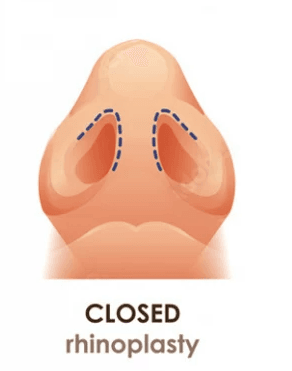
Best for:
- Minor cases (minor tip modification)
- Revisional rhinoplasty
Combination Therapy
Rhinoplasty can be combined with other cosmetic procedures to achieve more natural results and improve facial balance. These include chin augmentation, facelift, lip lift, and eyelid surgery. It can also be performed along with other nasal surgeries such as septoplasty.
Risks
Rhinoplasty is generally considered a safe procedure with only rare and temporary complications.
Adverse Reactions
- Reduced Smell Sensation (87%) temporary and resolves on its own within 2-6 months
- Resorption 2%
- Infection (1-2%)
- Bleeding (less than 1%)
- Breathing issues
Specific Considerations based on Ethnicity
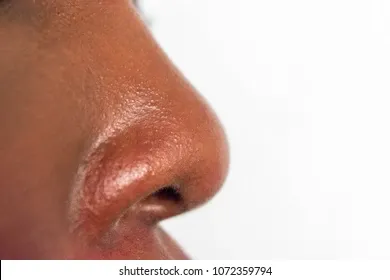
African/African American
Unique Features: Thick oily skin, broad nose
Typical Aesthetic Goal and Surgical Plan: Sharpen tip and narrowing nostrils (done with caution to preserve the ethnic identity).
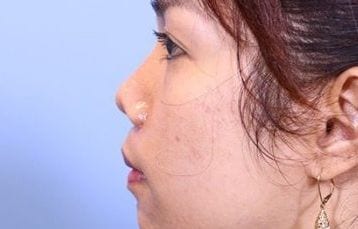
Southeast Asia
Unique Features: Small nasal height with wide base, thin septal cartilage, small bones, short nasal tip.
Typical Aesthetic Goal and Surgical Plan: Nasal bridge augmentation, sharpen tip, preserve minor depression above the tip.
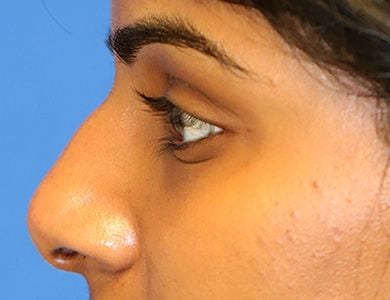
South Asian (India and Pakistan)
Unique Features: Thick skin, wide nose, nasal hump
Typical Aesthetic Goal and Surgical Plan: Narrow bony width, sharpen tip, maintain nasal height.
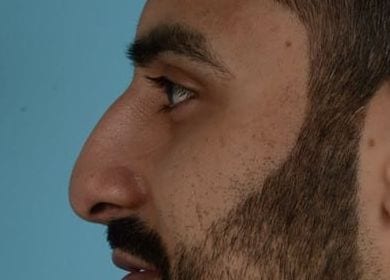
Middle Eastern
Unique Features: Thick skin, depressed tip, high hump.
Typical Aesthetic Goal and Surgical Plan: Straighten nasal bridge, slightly lifting nasal tip.
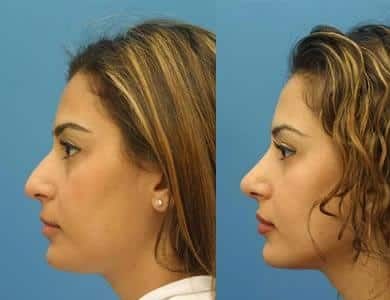
Hispanic
Unique Features: Average nasal height, thick oily skin, rounded, wide tip, and wide nasal opening.
Typical Aesthetic Goal and Surgical Plan: Sharpen tip and narrow base
Navigation: