
Intragastric Balloon Placement

Duration
30-60 minutes
Downtime
1-3 days

Cost
6000 -9000$
Setting
Outpatient
Overview
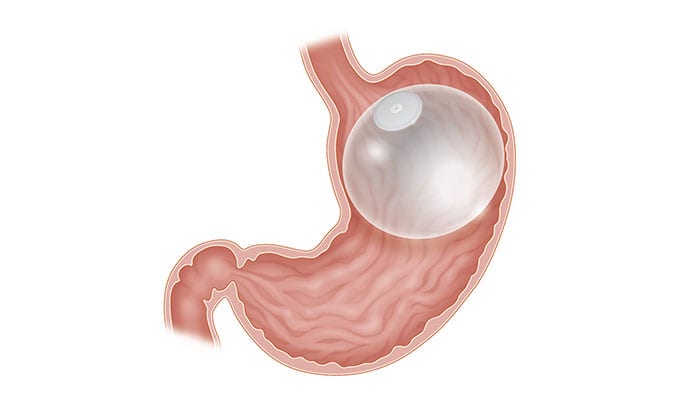
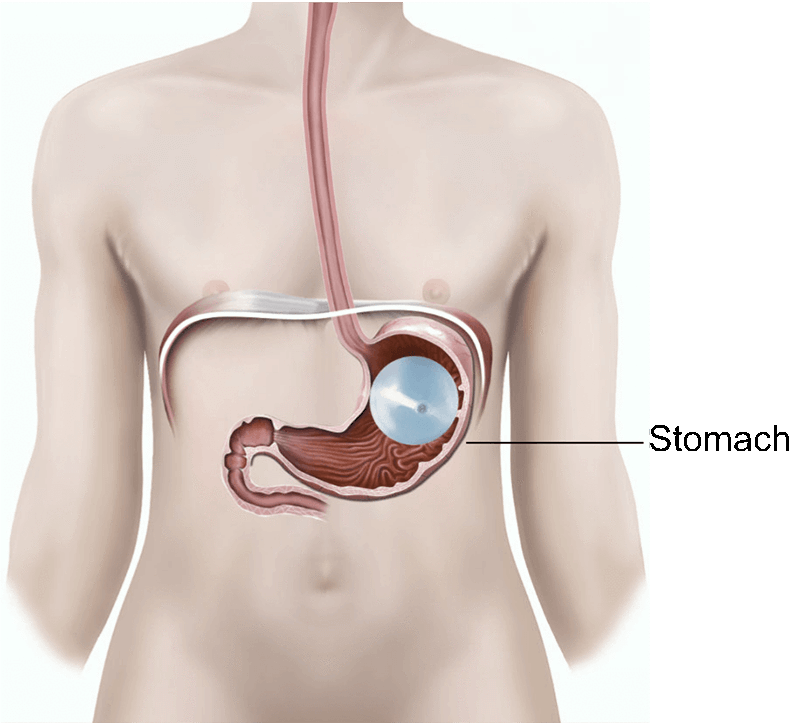
An intragastric balloon is a weight loss procedure. It involves placing a soft balloon inside your stomach. It helps you feel full faster and eat less. This procedure is best if you seek subtle weight loss and are willing to adopt healthy eating and exercise.
Candidates
Ideal BMI range: 30–35 kg/m²
If your BMI is higher (above 40 kg/m²): This procedure can serve as a bridge before major weight loss surgeries like sleeve gastrectomy or Roux-en-Y. Reducing weight first helps lower surgical risks such as blood clots or breathing complications.
If your BMI is lower (27–30 kg/m²): You may still be a candidate if you have an obesity-related condition, such as type 2 diabetes, high blood pressure, or sleep problems, or if supervised diet and exercise programs haven't worked for you
You should avoid this procedure if you have :
- Prior stomach surgery
- Blood clotting problems
- Bleeding wound in the stomach or esophagus
- Pregnancy
- Hiatal hernia >5 cm
- Active alcohol or drug addiction
- Severe liver disease
Benefits
6-15 kg weight loss.
6.7 Kg greater weight loss compared to lifestyle interventions alone.
Common Misconceptions
The balloon in my stomach will cause obstruction and prevent food from passing into the intestines.
The balloon won't cause obstruction if properly inflated. Its diameter is larger than the opening between the stomach and intestines, like a ball that can't fit through a doorway, so it stays safely in place. However, if the balloon deflates (such as when left more than 6-12 months), it may squeeze through the opening and cause an obstruction.
This procedure will provide permanent weight loss.
Intragastric balloons are temporary devices. Long-term success depends on patient commitment towards a healthier lifestyle.
Balloon Types
Two types of intragastric balloons are currently approved by FDA. Both of them are inserted and removed endoscopically.
Orbera
Total body weight loss: 13.2%
Excess weight loss: 25-38%
This type can't be adjusted
Spatz3
Total body weight loss: 15-16.4%
Excess weight loss: 43-67%
The volume can be adjusted by adding or removing saline.
Risks
Intragastric balloon is a low-risk procedure that has been used safely in thousands of patients worldwide. Most complications are mild and typically resolve within the first week. Serious complications, such as bowel obstruction or a hole in the stomach wall, remain rare.
Complication | Rate |
|---|---|
Nausea | 63% (Trang et al., 2018) (Martins Fernandes et al., 2016; Yorke et al., 2016; Zheng et al., 2015) |
Abdominal pain | 58.5% (Trang et al., 2018; Yorke et al., 2016; Zheng et al., 2015) |
Vomiting | 55% (Trang et al., 2018) (Martins Fernandes et al., 2016; Zheng et al., 2015) |
Heartburn | 50%(Martins Fernandes et al., 2016) |
Acid Reflux | 20.5% (Trang et al., 2018) |
Intolerance and early removal | 5.7% (Xia et al., 2025) |
Stomach ulcer | 1.1% ( Xia et al., 2025) |
A hole in the stomach wall | 0.5% (Yorke et al., 2016) |
Bowel obstruction | 0.8% (Yorke et al., 2016) |
Patient can be at a higher risk if they have:
- Previous abdominal surgery
- Chronic gut inflammation ( like Chron’s disease)
- Regular use of pain relievers like ibuprofen or aspirin
- Inflammation of the esophagus
- Psychiatric disorder
Anesthesia
This procedure uses 2 main types of anesthesia:
Conscious Sedation:
When is it used: This type is used when there is no severe anxiety or strong gag reflex.
How you will feel: You will be relaxed but still conscious, aware of what’s happening, and can respond to questions or instructions.
Deep Sedation
When is it used: Strong gag reflex or high anxiety/low tolerance for endoscopy.
How you will feel: You will be almost unconscious, usually breathe spontaneously, have little to no awareness of the procedure, and usually have no memory of what happened.
Navigation: